 blog
Are Cold Weather Base Layers Worth It in 2026?
Last Updated: October 26, 2026
Quick Summary
The best cold weather base layers in 2026 match fabric weight to your activity, sweat rate, and actual temperature rather than being the thickest option available. Choose ultralightweight or lightweight for high-output days, and midweight or heavyweight for low-output cold.
- REI sorts base layers into ultralightweight, lightweight, midweight, and heavyweight, with thicker fabrics adding warmth.
- Switchback Travel calls merino its favorite base-layer material for cold weather, citing softness and odor resistance.
- Lightweight merino runs around 150-200 gsm; midweight around 200-260 gsm; heavyweight is 260 gsm and up.
- A base layer for skiing should never be cotton because it holds sweat against your skin.
- GearJunkie tested 14 men's base layers and found fit and fabric weight matter more than price.
Table of Contents
- Best Cold Weather Base Layers 2026: What to Look For
- Best Merino Wool Base Layers and Synthetic Alternatives
- Base Layer vs Thermals: What Is the Real Difference?
- Best Base Layers for Hiking, Skiing, and High-Output Days
- Frequently Asked Questions
Best Cold Weather Base Layers 2026: What to Look For
The best cold weather base layers in 2026 match your activity, sweat rate, and actual temperature, not the thickest option on the shelf. Editors at CleverHiker researched 30 base-layer sets before testing top picks, and that sorting is what this decision needs. Below, we break down fabric weight, material trade-offs, and fit so you choose correctly the first time.
Fabric weight is the most useful framework. REI's base layer guide sorts options into ultralightweight, lightweight, midweight, and heavyweight, with thicker fabrics adding warmth. Match weight to output, not to how cold the parking lot feels.
| Activity | Recommended Weight | Why |
|---|---|---|
| Running, fast hiking | Ultralightweight or lightweight | Vents heat before you overheat |
| Resort skiing, snowshoeing | Lightweight to midweight | Balances warmth with sweat management |
| Winter camping, cold starts | Midweight plus a spare | Insulation when you stop moving |
| Extreme cold, low output | Heavyweight | Maximum warmth, less breathability |
Watch out: buying heavyweight for high-output days can lead to sweating on the climb and feeling chilled on the descent.
Best Merino Wool Base Layers and Synthetic Alternatives
Merino wool earns its reputation for chilly conditions. Switchback Travel's 2026 baselayer guide calls merino its favorite base-layer material for cold weather, citing softness, warmth relative to weight, and temperature regulation. It also resists odor, which matters on multi-day trips.
Synthetics deserve equal billing. BikeHikeSafari's 2026 hiking guide includes both merino and synthetic options, reflecting real trade-offs rather than one material winning outright.
The useful question is how each fiber behaves once you sweat. Merino absorbs moisture, feeling warm when damp but gaining weight and drying slowly. Polyester moves moisture to the surface and evaporates it quickly, feeling clammy but recovering fast. Neither is universally better, the right pick depends on your output and how wet you get.
| Fiber | When damp | Dry speed | Odor | Durability | Best for |
|---|---|---|---|---|---|
| Merino wool | Feels warm, gains weight | Slow | Excellent | Good, pills with abrasion | Low-to-moderate output, multi-day trips |
| Polyester | Feels cool and clammy | Fast | Poor over time | Excellent | High-output, sweaty days |
| Wool blend (merino + synthetic) | Middle ground | Moderate | Good | Better than pure merino | Daily wear, mixed use |
| Spandex-enhanced knit | Depends on base fiber | Depends on base fiber | Depends on base fiber | Good stretch recovery | Close-fitting next-to-skin layers |
Fabric weight changes the trade-off as much as fiber. Lightweight merino (around 150-200 gsm) breathes well for high-output days; midweight (around 200-260 gsm) adds warmth for resort skiing and cold starts; heavyweight (260 gsm and up) is for low-output cold. A lightweight synthetic at the same weight dries faster but smells sooner, so many experienced users keep one of each.
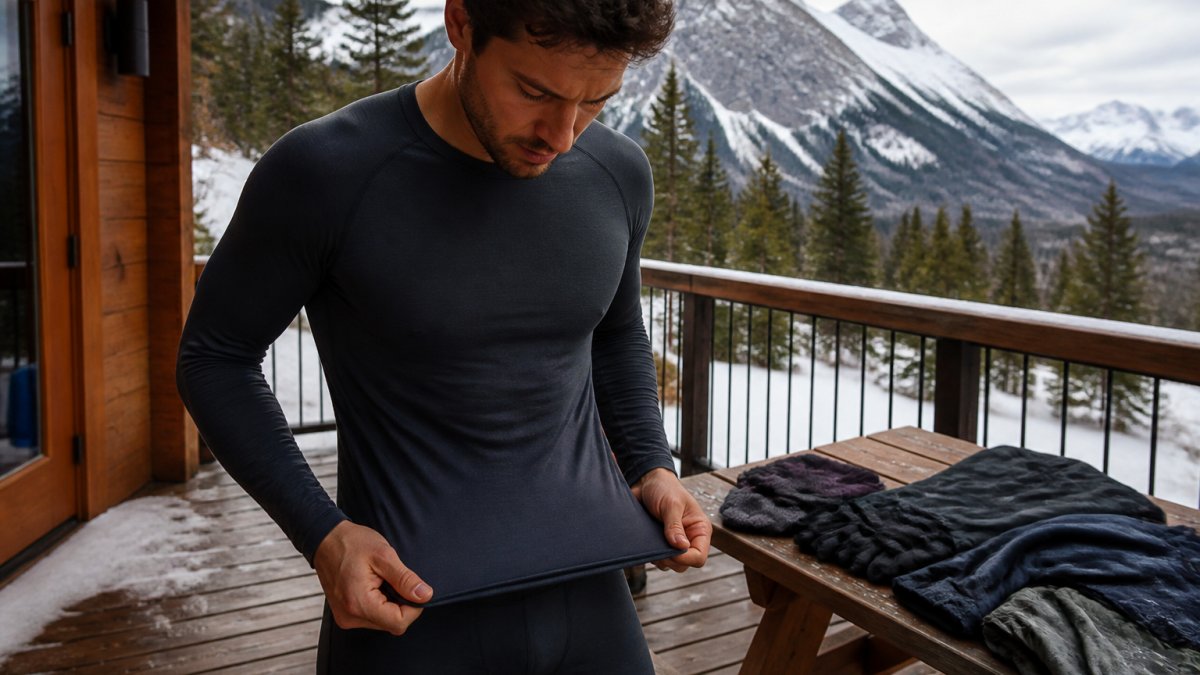
For a synthetic option built for layering, the men's fleece-lined thermal base layer set uses a 95% polyester, 5% spandex knit with a soft fleece lining and close-fitting cut. Check the listed chest, waist, and height measurements before ordering.

Base Layer vs Thermals: What Is the Real Difference?
Base layers and thermals are the same garment category, but the terms signal different priorities. "Thermals" usually describes long underwear built primarily for warmth, often in cotton blends or heavier knits. "Base layer" describes a next-to-skin layer engineered for moisture wicking and breathability first, warmth second.
Men’s Fleece-Lined Thermal Base Layer Set →
That distinction changes what you buy. A cotton thermal legging is fine for lounging at home. A base layer for skiing should never be cotton, because it holds sweat against your skin and stops insulating once damp.
From there, the layering system does the rest:
- Base layer: manages sweat against skin
- Mid layer: fleece or insulated jacket traps warmth
- Shell: blocks wind and wet snow
Best Base Layers for Hiking, Skiing, and High-Output Days
Most guides sort base layers by activity label, hiking, skiing, running, but the label hides the variable that matters: how hard you work and how much you sweat. A resort skier standing in lift lines has more in common with a winter camper than with a skier who hikes the bootpack. Organize by output instead.
| Output level | Sweat rate | Recommended weight and fiber | Why |
|---|---|---|---|
| Low (standing, lift lines, camp) | Low | Midweight merino or heavyweight synthetic | Traps warmth without needing to vent much |
| Moderate (steady hiking, snowshoeing) | Moderate | Lightweight to midweight merino or blend | Balances warmth with moisture movement |
| High (fast hiking, running, bootpacking) | High | Ultralightweight or lightweight synthetic | Moves sweat fast and dries before you chill |
For hiking and backpacking, prioritize lightweight merino or a fast-drying synthetic and size it close to the skin. GearJunkie tested 14 men's base layers across budgets, and the recurring lesson is that fit and fabric weight matter more than price. Loose fabric can't wick; it just bunches under pack straps.
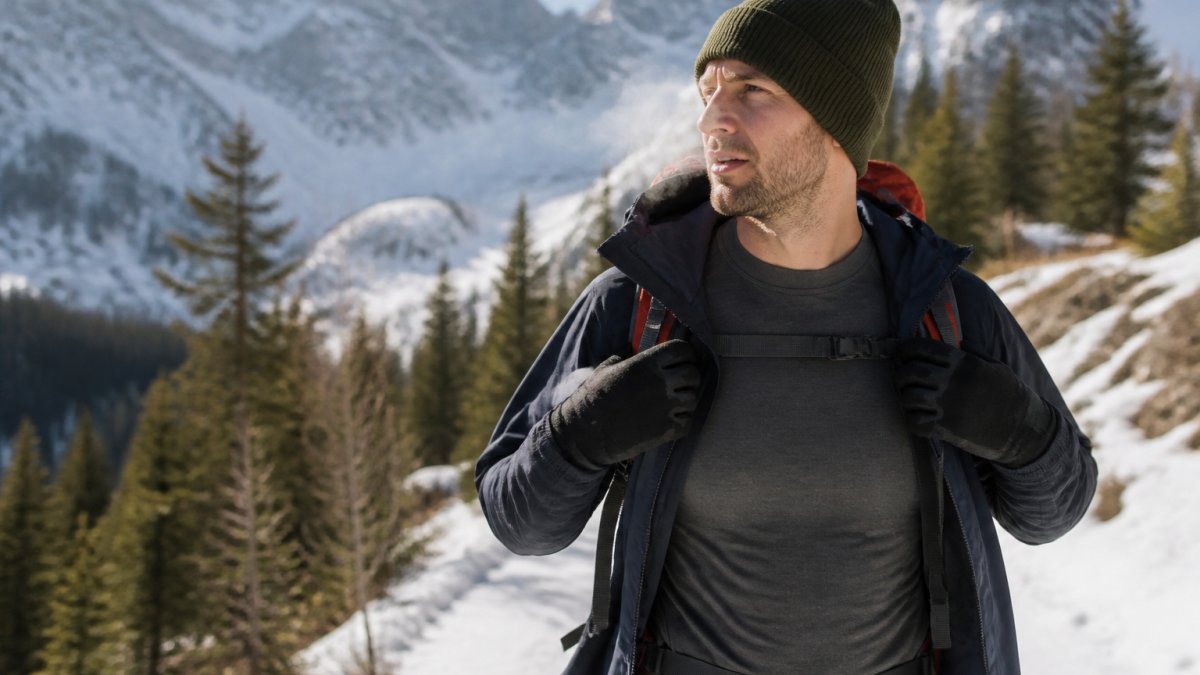
For skiing and high-output cold days, plan for cold starts and hot climbs: start with a lightweight top, carry a midweight spare, and cover exposed skin. Pair your base layers with warm skiing pants for the rest of your ski-day system.
Fit guidance: check the size chart against your actual measurements and expect stretch to do the work, not extra room.
Frequently Asked Questions
What is the best base layer for winter hiking?
A midweight base layer in merino wool or a merino-synthetic blend suits most winter hiking. It traps warmth without overheating when you climb, and merino resists odor across multiple days. If you sweat heavily on steep sections, a lightweight top with a warmer mid layer gives you more control. Fit matters as much as fabric: the layer should sit close to the skin with no bunching under pack straps.
Is merino wool or synthetic better for cold weather base layers?
Match the material to your activity, not to a single rule.
How should a cold weather base layer fit?
It should sit close to the skin with no wrinkles under a mid layer, and stretch enough to move with you. Check the listed measurements rather than your usual size. The men's fleece-lined thermal set from ABsnowlife lists a chest of 96-100 cm and a height of 175-180 cm, and the product listing advises comparing those numbers before ordering.
Winter gear rewards planning, not guesswork. Match your base layer weight to your activity, pick a fabric that handles your sweat rate, and build the layers around it. ABsnowlife curates winter gear for mountain days and local trails alike, with a Canadian outlook on what actually works in real cold. Explore the collection and get started with ABsnowlife to prepare for your next snowy outing with confidence.
